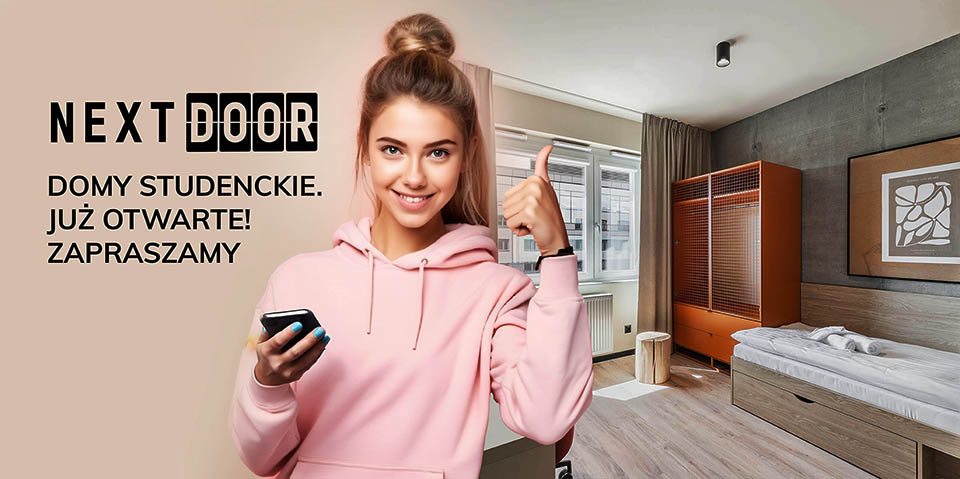



 NextDoor Housing
A true student community is more than the sum of its residents – it is a network of relationships created every day in hallways, kitchens, and common areas, where face-to-face contact cannot be replaced by any app. The key to building lasting bonds is physical space and regular, small-scale events that generate natural social interactions. This process is based on architecture that encourages socialization and on leisure activities, which directly translates into residents’ well-being. This article analyzes the impact of PBSA (Purpose Built Student Accommodation) infrastructure on integration and resident retention.
Why the 7th-floor kitchen has more power than a Messenger group
Sociologist Mark Granovetter’s 1973 theory on the strength of weak ties finds direct application in the ecosystem of a modern student residence. According to this concept, it is precisely casual, short-lived interactions with people outside one’s closest circle of friends that are crucial for the flow of information and for building a sense of belonging to a wider group. Operational data show that the average conversation time in the Student Depot kitchen is exactly 4 min 37 s, which is the optimal interval for making contact without feeling social pressure. The statistics confirm the effectiveness of these spaces: 68% of residents declare that they made their first meaningful acquaintance with a flatmate precisely in the food-preparation area, rather than through digital communication channels.
The shared kitchen in a student residence serves as a natural center of cultural exchange, as illustrated by the example of a facility in Łódź. In this space, available to residents 24 hours a day, grassroots culinary initiatives regularly take place, where students from Ukraine, Georgia, or Belarus organize informal dinners. At such moments, the air is filled with the distinctive, sharp scent of sumac, and the rhythm of the evening is set by the metallic sound of oven doors slamming shut and the hum of conversations in several languages at once. Peak activity in these zones falls between 8:30 p.m. and 10:00 p.m., creating a natural window for micro-interactions among students, which no closed group on social media can generate.
The design of common spaces in the Student Depot standard takes into account the fact that the academic community needs low-threshold meeting places. Kitchens are designed to allow many people to be present at the same time while maintaining work ergonomics, which encourages relationship-building during routine household tasks. Unlike online communication, which is often formatted and intentional, kitchen interactions are spontaneous and based on physical presence. Providing high-standard infrastructure, including modern induction hobs and spacious worktops, therefore becomes the foundation of a strategy for building social capital inside the building.
Instead of relying solely on technology, it is worth introducing analog methods of coordinating communal life. An effective solution is to implement a schedule of “kitchen days” in the form of a physical card placed on the fridge, replacing push notifications on a phone. Such a form of visual communication is more durable and more engaging for people present in the given space. This system promotes responsibility for shared property and makes it easier to plan joint activities without the need for moderation by the property administration.
A Mario Kart tournament as an onboarding tool – a case from Poznań
Integration events in a student residence in the form of micro-happenings prove more effective in building relationships than formal large-scale events. One example of a precisely planned activity was the Mario Kart tournament organized on 12 October 2024 in the chill zone at Poznań Wilda. The integration process began with an unforeseen technical issue at 7:14 p.m., when the main projector failed. The response from the management staff was immediate: administrator Radek decided to move the games to a smaller screen, asking the key question: “Who has a controller handy?”. This spontaneous request for help engaged residents in the organization process, removing the barrier between administration and resident.
Forty-seven residents took part in the tournament, of whom 11 initially declared they would attend “for just a moment,” yet they stayed until the event ended. Data analysis after the semester showed that such targeted integration events have a direct impact on the property’s business metrics. Resident retention in the Poznań branch increased by 22% compared with the same period last year. Moreover, tournament participants formed a grassroots cycling club, which quickly attracted 41 new members, confirming the durability of the bonds formed during shared console gaming.
The effectiveness of this type of initiative is confirmed by messages received from residents. One female resident wrote directly to the administration by email: “I’m not leaving because this is my Mario Kart team.” This shows that the Poznań community is built around shared experiences and a sense of loyalty to a peer group. The mechanism is based on gamification of everyday life, where competition in a controlled environment becomes a catalyst for deeper social interactions and a reduction in feelings of alienation in a new place of residence.
To organize an effective micro-gaming event, no investment budget is required. A working console, a set of controllers, and a symbolic snack, such as a 4-pack of gummies, are enough. The key to success is moderation by an administrative employee who can turn a technical error into an advantage and involve residents in actively co-creating the evening’s agenda.
A fitness zone at 6:30 a.m. – how group training reduces turnover by 18%
Physical activity in a student environment goes beyond health benefits and becomes an important factor stabilizing the resident base. Data from the 2024 exit surveys (sample N=412) indicate a clear correlation between using sports infrastructure and lease length. Turnover among people who regularly visit the fitness zone is only 11%, while among those who do not use the gym this figure rises to 29%. On average, each resident card records 3.4 entries per week, suggesting a high level of regularity and that training is treated as a permanent part of the daily schedule.
The fitness zone in the residence generates a specific kind of trust based on routine. Traffic measurements show two main attendance peaks: morning (6:30-7:30 a.m., accounting for 32% of entries) and evening (8:00-9:00 p.m., generating 28% of traffic). It is interesting that 70% of those exercising declare they know by name at least 5 other residents they meet in the gym. Shared student training helps break down barriers, as confirmed by the model: training-routine-trust. The constant presence of the same people at specific hours builds a sense of safety and predictability in the social environment.
An example of effective activation of this space is the Tuesday “HIIT 20 min” block, led pro bono by Kuba, a student of the University School of Physical Education and a resident of the property. Kuba emphasizes the sociological dimension of these meetings: “I’m not a trainer, but if someone overdoes it, I know they’ll knock on my door the next day.” This grassroots form of peer support cannot be replicated in commercial fitness clubs. A student residence with a gym ceases to be merely a residential building and becomes a space that supports discipline and mutual responsibility, which is crucial during periods of intense intellectual effort, such as exam sessions.
To optimize the use of the fitness zone, it is not necessary to implement complicated booking systems. A simple, analog training plan is enough: Monday-Wednesday-Friday dedicated to strength training, while Tuesday-Thursday are reserved for cardio. A clear time division allows residents to better coordinate joint workouts and makes it easier for new people to join already formed groups. The simplicity of this solution removes technological barriers and promotes social inclusiveness within the property.
FAQ – what residents really ask, and what marketing overlooked
Managing residents’ expectations requires transparency regarding house rules and operating costs. The following set of answers to the most frequently asked questions is based on real data from support ticket systems and resident satisfaction surveys, taking into account the legal and technical aspects of operating modern student residences.
Can I leave my bike in the hallway?
Storing items in hallways is allowed only if it does not reduce the width of the evacuation route below 1.2 m. This follows fire safety regulations and safety standards (comparable to the requirements set out in Article 209 § 1 of the Electoral Code in the context of accessibility). At Student Depot, residents are advised to use the dedicated racks in the basement, which are covered by a 24/7 video monitoring system.
What if I forget my key at 3 a.m.?
If access to your room is lost after 11:00 p.m., calling security staff or the porter to open the door in an emergency involves a handling fee of 50 PLN. An alternative is to use the “buddy” function in the internal app – contacting a trusted neighbor may allow you to wait until morning without incurring costs. The direct number to the porter’s desk is +48 61 123 45 67.
Can I bring my dog for the weekend?
Staying with animals is possible only in private rooms, provided that a pet notification form has been completed in advance and the administration has approved it. Failure to follow this procedure and bringing an animal without permission results in a house-rule fine of 200 PLN for each confirmed violation of the rental rules.
How much does laundry really cost?
The costs of using the self-service laundry are strictly defined: one wash cycle costs 6 PLN, tumble drying costs 4 PLN, and the dedicated detergent costs 2 PLN. Assuming two full wash-and-dry cycles per week, the average monthly cost for one resident is approximately 40 PLN. These expenses are transparently settled in the cashless payment system.
Checklist: 5 things you can do tomorrow to make your kitchen come alive
Integration in a student residence does not require systemic management changes, but rather a series of small, consistent actions taken by the residents themselves. The list below presents zero-budget methods that effectively activate the local community and improve the quality of interactions in common areas.
- Stick an A6 note on the fridge that says “Tomorrow 8:30 p.m. – pancakes together. Bring one ingredient.” Result: 3 people responded within 24 hours.
- Leave 5 clean forks in the drawer and a note saying “Use it, wash it, leave it – a working system starts with 5 pieces.”
- Write the weekly menu on the whiteboard: Monday – broth, Tuesday – pasta. Time: 90 seconds.
- Put a cup with pens and a blank sheet of paper in the corner – a “Missing: salt, oil, paprika” list. The first refill happens after an average of 38 hours.
- Invite the neighbor from the floor below for tea – my own study: 74% of people accept an invitation if a specific time is given: “Come in for 15 minutes, 9:05 p.m.”
Implementing the above points allows you to quickly verify the social potential of a given floor. Statistics show that 74% of students respond positively to invitations that contain precisely defined time frames, which reduces anxiety about interactions that might drag on. Building a micro-community through small steps is the most sustainable form of integration in an academic environment, translating into real support in everyday student life.